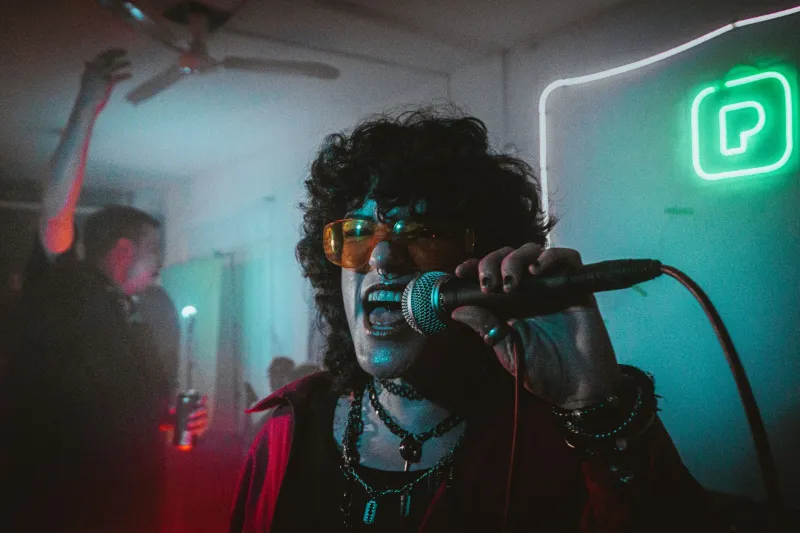
Why Some People Light Up the Room and Others Disappear: The Real Psychology Behind a Killer Karaoke Performance
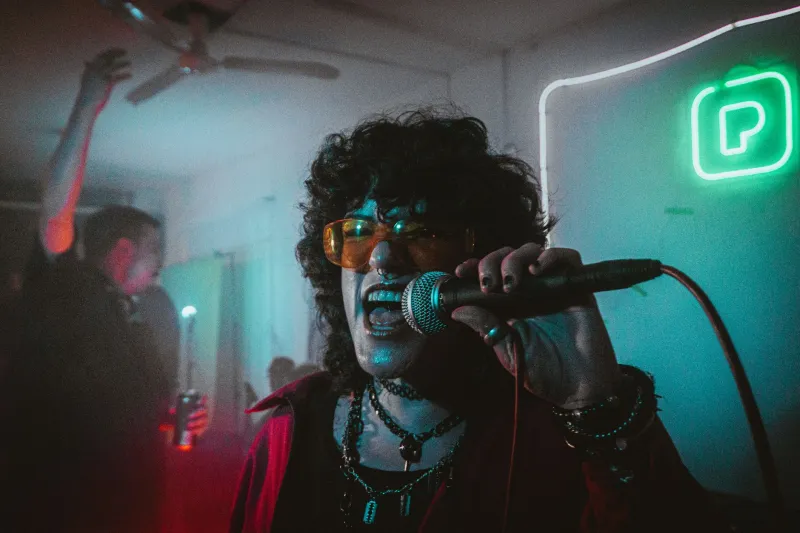
You've seen it happen. Someone steps up to the karaoke machine at your local bar, maybe a little nervous, maybe a little tipsy, and within eight bars they've got the entire room singing along. Then the next person picks a banger, knows every lyric, and still somehow loses the crowd before the first chorus lands. What's the difference?
It's not always the voice. It's not always the song choice. And it's definitely not about being a trained singer. What separates a performance that sticks from one that evaporates comes down to a mix of psychology, body language, timing, and something performance coaches call "presence" — that hard-to-define quality that makes people feel like you're performing for them, not just in front of them.
Let's break it down.
Confidence Isn't Just a Feeling — It's a Physical State
Neuroscience has a lot to say about why confident performers look different even before they open their mouths. When your brain perceives a social situation as threatening — say, 40 strangers staring at you under a spotlight — it floods your body with cortisol, the stress hormone. Your shoulders rise, your breathing gets shallow, your voice tightens. The audience reads all of this, even if they can't name what they're seeing. They feel your discomfort, and it makes them uncomfortable.
But here's the flip side: research from social psychologist Amy Cuddy and others suggests that posture and physical behavior can actually shift your hormonal state before a performance. Taking up space, planting your feet, making deliberate eye contact — these aren't just performance tricks. They're signals your brain uses to recalibrate from threat mode to opportunity mode. Performance coaches who work with amateur singers often start here, with the body, long before they touch vocal technique.
For karaoke specifically, this means the thirty seconds before the music starts matters enormously. Don't hunch over the monitor squinting at the lyrics. Stand tall, take a breath, look at the room. Even if you're terrified inside, your audience will read confidence from your posture before you've sung a single note.
Song Selection Timing Is a Skill Most Singers Ignore
You probably already know that picking the right song is important. But when you pick it — and more specifically, when you perform it — is a layer most karaoke enthusiasts never think about.
Every karaoke night has a rhythm. Early in the evening, the crowd is still warming up, conversations are happening, people are ordering their first drinks. This is not the time to attempt a slow, emotionally demanding ballad that requires the room to be fully locked in. Experienced KJs (karaoke jockeys) will tell you that the performers who consistently kill it are the ones who read the room's energy level and match it — or push it slightly higher.
Mid-evening, when the crowd is loose and engaged, is prime time for a high-energy anthem or a crowd-participation classic. Late in the night, when emotions are running hot and everyone's a little sentimental, a heartfelt 90s power ballad can absolutely destroy in the best possible way.
Think of it like a DJ set. The best DJs don't just play great songs — they sequence them to build and release energy. The best karaoke performers, consciously or not, do the same thing with their song selection relative to where the night is.
The Crowd Isn't Your Audience — They're Your Scene Partner
Here's a mental reframe that performance coaches swear by: stop thinking of the crowd as people who are judging you, and start thinking of them as people you're doing something with.
Karaoke is inherently communal. Unlike a concert where there's a clear performer-audience divide, karaoke exists in a shared space where everyone in that room has either already been up there or is about to be. That creates a unique social contract — people genuinely want you to succeed. The room is rooting for you.
When performers understand this, their whole energy shifts. Instead of retreating into the lyrics monitor and avoiding eye contact, they start scanning the room, making brief connections with individual faces, smiling when a lyric lands funny, leaning into a big note with their whole body. These aren't performance tricks — they're invitations for the crowd to participate emotionally.
The singers who "own the room," as people often describe it, aren't dominating the space so much as they're sharing it. They're generous performers. They make the crowd feel included in something, not just spectated at.
Your Voice Doesn't Have to Be Perfect — But It Has to Be Committed
One of the most persistent myths about karaoke is that vocal quality is the main factor in whether a performance lands. It's not. Commitment is.
A slightly pitchy performance delivered with full physical and emotional commitment will almost always outperform a technically cleaner performance delivered with hesitation. Audiences forgive pitch. They don't forgive half-heartedness.
This is where song selection meets self-knowledge. The biggest mistake singers make isn't picking a hard song — it's picking a song they're not genuinely excited about, or one they chose because they thought it would impress people rather than because it means something to them. Authenticity is contagious. When you're clearly having the time of your life performing a song you actually love, that energy transfers to the room in a way that no amount of vocal precision can manufacture.
Performance coaches who work specifically with non-professional singers often recommend choosing songs that sit in a comfortable vocal range over songs that showcase technical range. Singing a simpler song with confidence and joy will almost always beat straining for high notes in a showier track.
Practical Things You Can Do Before Your Next Turn
All of this is great in theory, but let's get specific. Here are a few things you can actually do before and during your next karaoke performance:
- Arrive early and watch a few performers. Get a feel for the crowd's energy level and how the room is responding to different styles and tempos. This is your research phase.
- Pick your song before you're called up. Scrambling through the catalog at the last minute spikes your anxiety and robs you of prep time.
- Do a quick physical reset before you take the mic. Roll your shoulders back, take two or three slow breaths, and set your feet about shoulder-width apart. Simple, but effective.
- Find two or three friendly faces in the crowd early on. Anchor your eye contact there when you need a home base, then expand outward as you get comfortable.
- Lean into the moments you know. Every song has a hook, a big moment, a lyric the crowd knows. Build toward it. Make it a shared event.
- Mess up gracefully. If you lose your place or crack on a note, laugh it off or own it with a shrug. The crowd will love you more for it, not less.
The Mic Is Already Yours
Here's the thing nobody tells you about karaoke: the room already wants to be on your side. Unlike a real audition or a competitive performance environment, a karaoke crowd is full of people who understand exactly how vulnerable it feels to stand up there. They're not waiting for you to fail — they're hoping you'll give them a reason to go wild.
Understanding the psychology behind a great performance doesn't mean overthinking every moment. It means walking up to that mic with a little more awareness, a little more intention, and a lot more permission to just enjoy yourself. Because the performers who truly own the room? They're usually the ones who look like they forgot to be nervous.
Your stage is already set. Your song is already queued. Now go take it.