More Than a Mic Night: How Karaoke Venues Are Quietly Becoming America's Favorite Hangout
For a long time, karaoke in America had a bit of an image problem. It was the thing you did after too many drinks at a dive bar on a Tuesday, or the obligatory activity at a bachelorette party that nobody fully committed to. Fun, sure — but not exactly a destination in its own right.
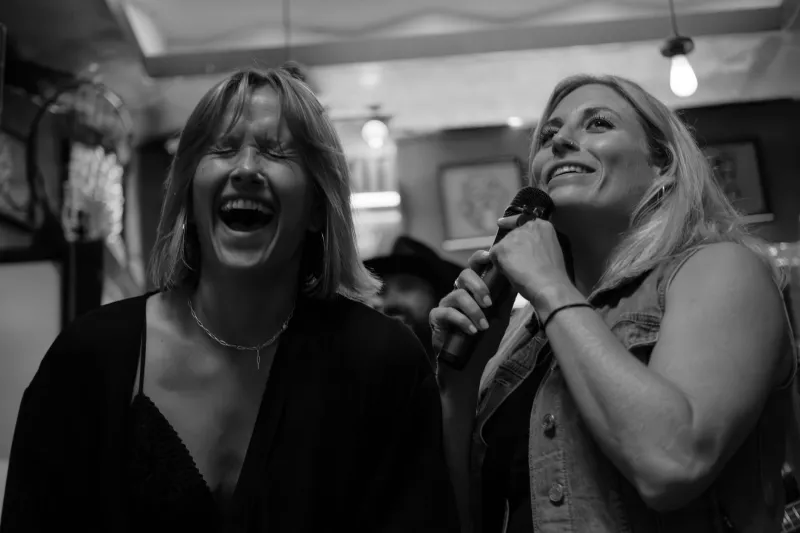
Something has changed. Walk into a karaoke venue in Austin, Nashville, Los Angeles, or Brooklyn on a Friday night and you'll find something that looks and feels nothing like that old stereotype. You'll find people who planned this. People who showed up sober, on purpose, excited. You'll find design-forward spaces, curated cocktail menus, private rooms with velvet banquettes, and song catalogs that span six decades and a dozen languages. You'll find, in other words, a legitimate night out.
Karaoke isn't just having a moment. It's having a reckoning.
The Third Place Problem — and Why Karaoke Is Solving It
Sociologists have long talked about the concept of the "third place" — the social environment that exists outside of home (the first place) and work (the second place). Historically, third places in American culture have included coffee shops, barbershops, bowling alleys, and yes, bars. But over the past decade, many of these spaces have either disappeared, been priced out of neighborhoods, or lost their social function to screens.
The pandemic accelerated this hollowing-out dramatically. When people finally emerged from isolation, they weren't just looking for entertainment — they were hungry for genuine human connection in a shared physical space. Passive experiences like movies or concerts, while enjoyable, don't quite fill that void. What people wanted was participation. Interaction. Something to do together.
Karaoke, it turns out, is almost uniquely positioned to deliver exactly that. It's inherently social. It requires presence — you can't really karaoke while scrolling your phone. It creates shared memories in real time. And it has a low enough barrier to entry that virtually anyone can participate, regardless of actual musical ability.
The timing couldn't have been more perfect.
The Private Room Revolution
One of the biggest structural shifts in the American karaoke scene over the past five years has been the widespread adoption of the private room model — a format that's been standard in Japan and South Korea for decades under the term norebang (Korean) or karaoke box (Japanese).
Instead of performing in front of a room full of strangers, guests rent a private room for their group — typically priced by the hour, ranging from $30 to $150 depending on room size and market. The experience is fundamentally different. There's no stage fright. There's no waiting for your turn while someone else performs. The social dynamic shifts from spectator sport to intimate group activity.
Venues like Norebang in New York, Sing Sing in multiple US cities, and the rapidly expanding Punch Bowl Social chain have all embraced this model, often pairing it with full food and cocktail service delivered directly to your room. The result is a private-dining-meets-entertainment hybrid that commands significantly higher per-head spend than traditional karaoke bars.
For venue owners, the economics are compelling: private rooms reduce the variability of the public-performance model, create predictable revenue through hourly booking, and attract a broader demographic — including groups who would never set foot on a public karaoke stage.
Technology Is Rewriting the Rules
The gear powering today's karaoke venues has evolved dramatically, and it's reshaping what the experience can look and feel like.
Digital song catalogs have essentially solved the catalog problem. Where venues once maintained physical binders of thousands of CDG discs, platforms like Karafun for Business, Stingray Karaoke, and KaraokeCloud now offer streaming access to tens of thousands of tracks — updated in real time, searchable by artist, genre, decade, or language. This matters enormously for venues serving diverse communities: a Korean-American family group, a Spanish-speaking birthday party, and a 70s rock enthusiast can all find exactly what they want in the same catalog.
Tablet-based song request systems have replaced the paper slip model at most modern venues, allowing guests to browse, queue, and preview songs from their table. Some venues have pushed this further with dedicated apps that let guests start building their queue before they even walk through the door.
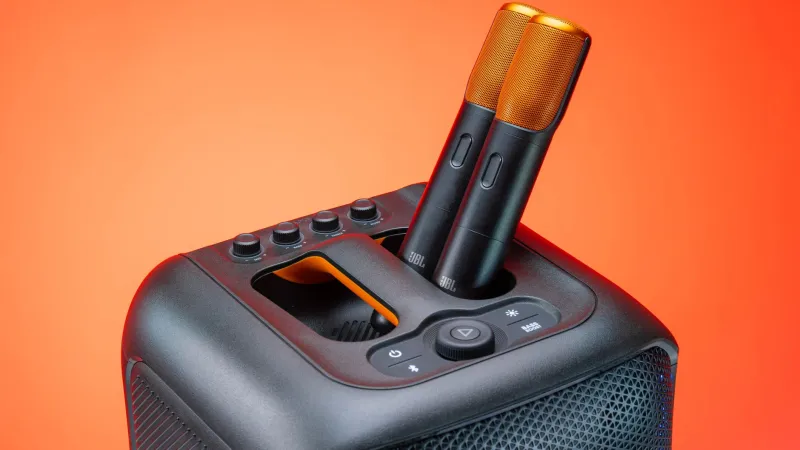
On the hardware side, advances in wireless microphone technology and compact powered speaker arrays mean that venues can achieve genuinely professional sound quality without the sprawling infrastructure that used to require a dedicated audio engineer on staff. A well-configured QSC or JBL system with a modern digital mixer can be operated by any trained staff member.
Augmented reality and LED wall technology are beginning to appear in higher-end venues, turning the performance space itself into a dynamic visual experience — reactive backgrounds, custom lighting scenes triggered by song selection, even real-time lyric displays projected at scale.
The Cultural Shift Nobody Fully Predicted
Beyond the physical and technological evolution, something more subtle is happening culturally. Karaoke has been quietly rehabilitated in the American imagination.
Credit partly goes to visibility. Shows like The Voice, American Idol, and Lizzo's Watch Out for the Big Grrrls have spent years celebrating imperfect, authentic vocal performance and framing it as joyful rather than embarrassing. The rise of TikTok has normalized people sharing unpolished musical moments with millions of strangers. The cultural permission to sing badly — to try, to feel it, to not care — has never been broader.
There's also a generational factor. Gen Z, now entering their prime social spending years, has grown up with a fundamentally different relationship to "cringe." The ironic detachment that made previous generations reluctant to commit fully to a karaoke performance has largely dissolved. Gen Z doesn't perform karaoke with a wink. They perform it with their whole chest.
This authenticity shift is visible in how venues are marketing themselves. The most successful new karaoke concepts aren't selling "a fun night out" — they're selling connection, self-expression, and community. The messaging has matured alongside the audience.
What This Means for Venue Owners
If you're operating or planning a karaoke venue in 2024, the opportunity is genuinely significant — but so is the competition. The venues winning right now share a few common traits:
They invest in sound quality. Nothing kills the experience faster than a muddy, feedback-prone system. Guests may not be able to name what's wrong, but they feel it. A clean, well-calibrated audio setup is table stakes.
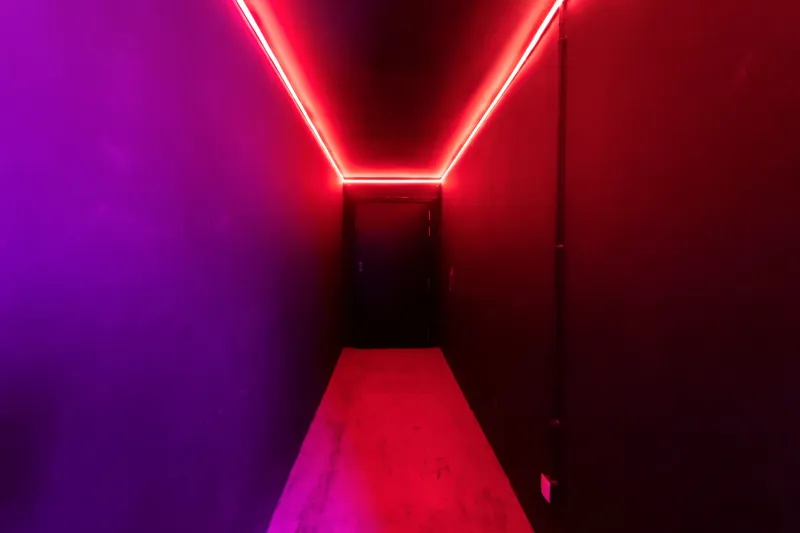
They design for the experience, not just the function. The physical environment matters enormously. Lighting, acoustic treatment, comfortable seating, and thoughtful room layouts signal to guests that this is a real destination, not an afterthought.
They build community deliberately. The best karaoke venues host themed nights, competitions, and special events that give regulars a reason to return and newcomers a reason to show up. A Tuesday "90s Night" or a monthly competition bracket turns casual visitors into loyal regulars.
They make it easy. Streamlined booking, intuitive song selection, and attentive service remove friction from the experience. Every point of friction is a reason for a guest to decide it's not worth the effort.
The Stage Is Set
Karaoke's evolution from novelty to necessity is still unfolding, but the direction is unmistakable. Americans are looking for places to gather, participate, and feel something together — and the modern karaoke venue, done right, delivers all three in a single night.
The mic has always been there. We're just finally taking it seriously.