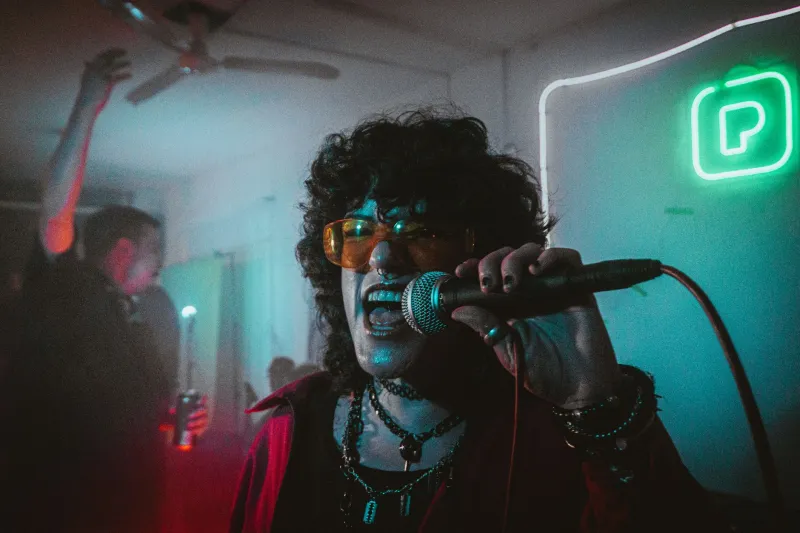
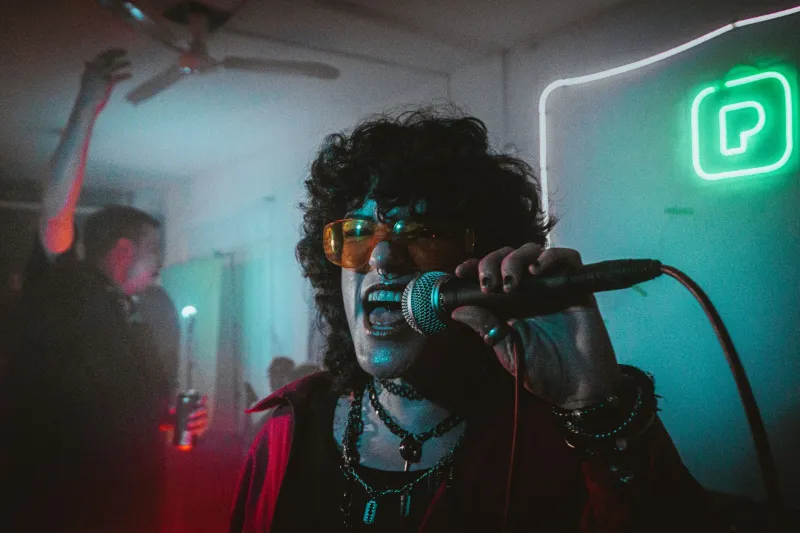
From Boardroom to Ballad: How Karaoke Became Corporate America's Favorite Team-Building Secret
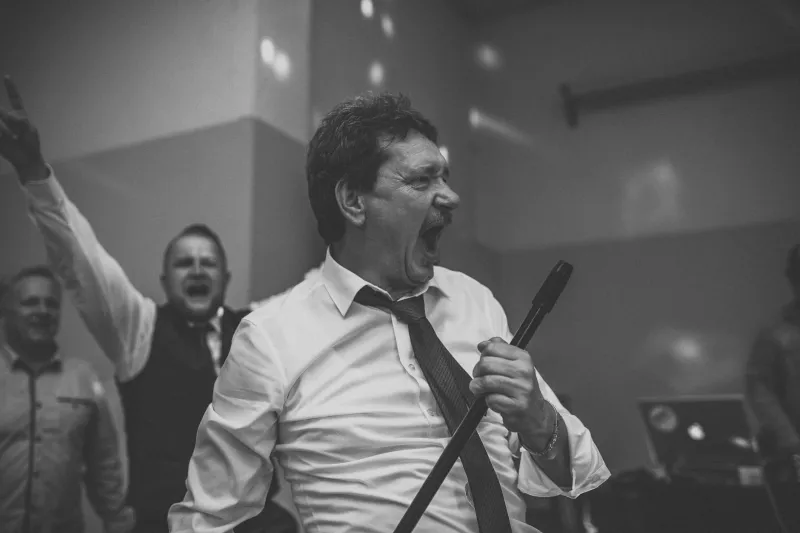
The Trust Fall Is Dead. Long Live the Mic Drop.
Somewhere between the third round of "Don't Stop Believin'" and a VP belting out a surprisingly committed Lizzo performance, something shifts. Titles fade. The org chart blurs. The guy who runs quarterly earnings reviews is suddenly just a guy who really, really loves classic rock.
This is the quiet revolution happening inside corporate America right now — and karaoke is leading it.
Venues across the country are reporting a noticeable spike in weeknight bookings from companies looking to do something different with their team events. Private karaoke rooms, once the territory of birthday parties and bachelorette nights, are filling up with coworkers on expense accounts. And the people organizing these events — HR managers, office culture leads, executive assistants — say the vibe in the room is unlike anything a ropes course or a catered lunch ever produced.
"We tried escape rooms, we tried cooking classes, we tried the whole thing," said one HR coordinator at a mid-sized marketing firm in Chicago. "But karaoke was the first time I actually saw people from completely different departments just... relax. Like, genuinely relax. It was kind of wild to watch."
Why Singing Together Actually Works
It turns out there's real science behind why standing up and singing in front of your coworkers does something that a personality assessment quiz simply can't.
Singing in groups triggers the release of oxytocin — sometimes called the "bonding hormone" — in a way that passive social activities don't. It also creates what psychologists refer to as "synchrony," a kind of shared physical and emotional rhythm that builds feelings of trust and connection between people. You don't need a whiteboard presentation to feel it. You just need someone to queue up "Bohemian Rhapsody" and watch what happens.
Beyond the biology, there's something uniquely equalizing about karaoke that corporate environments almost never create on their own. When your department head is up there fumbling through the words to a Taylor Swift song they definitely don't know as well as they claimed, the power dynamic shifts — even if just for a night. That momentary leveling of the playing field can have a lasting effect on how teams communicate and collaborate back at the office.
"It humanizes leadership in a way that a town hall meeting just doesn't," noted one venue owner in Austin who hosts a growing number of corporate bookings at her private karaoke lounge. "When a manager gets vulnerable in front of their team — even in a silly, low-stakes way — it opens doors. People come back to work on Monday feeling like they actually know each other."
What Smart Companies Are Actually Booking
Not all karaoke events are created equal, and the companies seeing the best results are putting some thought into the logistics.
Private room rentals are the overwhelming preference for corporate groups. Open-mic bar karaoke can be fun, but it introduces unpredictability — long waits between songs, unfamiliar crowds, and the kind of chaotic energy that doesn't always land well with a mixed group of colleagues. A dedicated private space gives teams control over the pacing, the playlist, and the overall atmosphere.
Venue owners with strong corporate clientele say the sweet spot for group size tends to be somewhere between 10 and 25 people. Smaller than that and the energy can feel flat; larger and it becomes hard for everyone to participate meaningfully. For bigger company events, some venues offer tiered arrangements — multiple private rooms running simultaneously, with groups rotating or competing against each other in a structured format.
Food and drink packages matter more than you'd think. Companies that bundle in appetizers and a drink option report that guests warm up faster and get into the spirit of things more quickly. Nobody's rushing to grab the mic on an empty stomach.
Song catalog access is another underrated factor. A venue with a deep, well-maintained library — one that spans decades and genres — makes it easier for everyone in a diverse group to find something they're comfortable performing. The 22-year-old new hire and the 54-year-old department director should both be able to find their moment. That breadth of choice is part of what makes karaoke uniquely inclusive as a corporate activity.
Tips for Pulling Off a Karaoke Team Event That Actually Lands
If you're an office manager or event planner thinking about taking the plunge, here's what the pros say makes the difference between a forgettable night and one people are still talking about at the holiday party.
Lower the stakes early. Kick things off with a group song — something everyone vaguely knows — before anyone has to go solo. It breaks the ice without putting anyone on the spot. Think "Living on a Prayer" or "Don't You Forget About Me." Crowd-pleasers that don't require much vocal commitment.
Get leadership in first. When a manager or executive takes the mic early in the evening, it signals to the rest of the group that this is a judgment-free zone. It's a small move with an outsized effect.
Lean into the duet format. Pairing people up for duets — especially across teams or seniority levels — is one of the most effective ways to accelerate connection. There's something about sharing a microphone that fast-tracks familiarity. It's hard to feel awkward around someone after you've harmonized with them.
Skip the competition unless your team loves it. Scored competitions can be fun for the right group, but they can also create anxiety for people who are already nervous about performing. Read your room. A collaborative, low-pressure vibe usually yields better results for mixed corporate groups.
Book early in the week for a Friday event. Private karaoke rooms fill up fast, especially at quality venues in major metro areas. If you're planning a Friday night work event, reach out to venues by Tuesday at the latest.
The Bigger Picture
What's happening here isn't just a trend in corporate event planning. It's a reflection of something shifting in how American workplaces think about culture and connection. Remote and hybrid work have made genuine human moments harder to manufacture. The old playbook — a catered lunch, a guest speaker, a team photo — doesn't cut through anymore.
Karaoke works because it asks something real of people. You have to show up, be a little silly, and let your guard down. That's not nothing. In a world where so much professional interaction happens through a screen, getting a group of coworkers into a room with a mic and a song catalog is almost radical.
Venue owners and HR professionals alike are betting that this isn't a passing moment. The bookings keep coming in, the repeat clients keep returning, and the post-event feedback keeps saying the same thing: we didn't expect to have that much fun together.
Maybe the best team-building tool was always the one that didn't feel like team building at all.