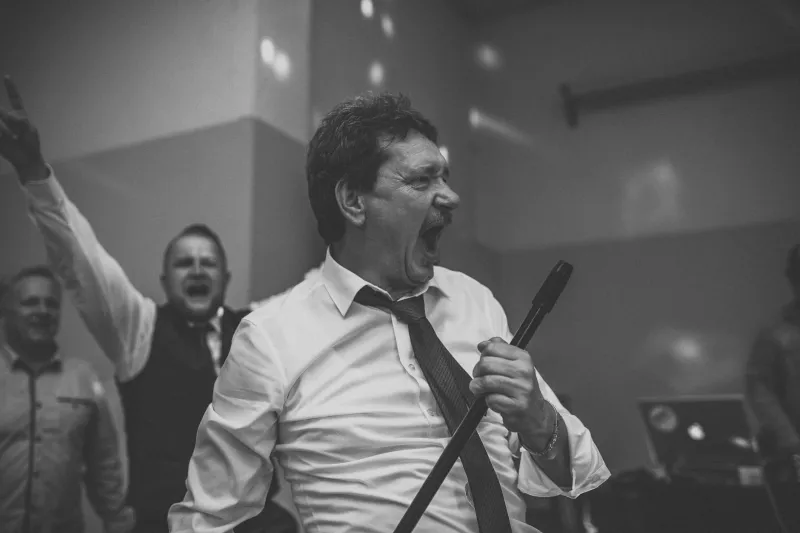
Sing Your Heart Out (And Mean It): The Surprising Power of Karaoke When Someone Special Is Watching

Let's be real. Most of us have been there. You're at a karaoke bar, maybe a dive spot with sticky floors and a song catalog held together by a rubber band, and the person you've been thinking about for three weeks is sitting right there at the table. Someone hands you the mic. Your heart does something embarrassing. And then — somehow — you absolutely nail it.
That moment? It's not just entertainment. It's chemistry, vulnerability, and a little bit of controlled chaos all rolled into one three-minute power move.
Why the Karaoke Stage Hits Different When the Stakes Are Personal
Performing in front of a crowd is one thing. Performing in front of someone is something else entirely. Psychologists who study social performance talk a lot about what's called "performative vulnerability" — the idea that willingly exposing yourself to potential embarrassment in a public setting actually signals emotional confidence and openness. And nothing quite captures that like walking up to a karaoke stage and committing to a ballad.
When you choose to sing in front of a crush, you're essentially saying: I'm willing to be seen, even if I crack on the high note. That kind of openness is magnetic. It bypasses all the careful texting strategy, the curated Instagram presence, the casual-but-calculated small talk. For a few minutes, you're just a person with a microphone and a feeling you can't quite say out loud.
Research in social psychology backs this up. Studies on shared emotional experiences — things like concerts, sports events, and yes, live performances — show that witnessing someone take a genuine risk creates a strong bonding response in observers. It's the same reason people cry at weddings they barely know anyone at. Authentic emotion is contagious.
The Song Choice Is Everything (No, Seriously)
Here's where a lot of people fumble the moment. You've got the courage, you've got the stage, but then you pick the wrong song — and the whole vibe deflates.
The goal isn't to show off. The goal is to connect. And those are very different things.
A showy, technically demanding song might impress the room, but it can actually create distance with the person you're trying to reach. You're performing at them instead of for them. What tends to land harder emotionally are songs with a clear, relatable narrative — something that lets the listener project their own feelings onto the moment.
Think about the difference between choosing Mariah Carey's "Emotions" (technically brutal, attention-grabbing) versus something like "Can't Help Falling in Love" by Elvis or "Make You Feel My Love" by Adele. The latter two feel like confessions. They're songs that mean something, and when delivered with even modest sincerity, they create a specific kind of atmosphere that no casual conversation can manufacture.
A few song archetypes that tend to work in your favor:
- The Earnest Classic: Think late '70s or '80s ballads — Bonnie Tyler, Journey, REO Speedwagon. These songs have built-in emotional permission. Nobody rolls their eyes at "Open Arms."
- The Modern Vulnerable Hit: Anything from John Legend, Hozier, or even a well-chosen Taylor Swift deep cut signals emotional intelligence without trying too hard.
- The Unexpected Sincere Choice: A song that seems surprising coming from you, but that you clearly know every word to. That contrast — wait, they know this? — is memorable.
What you want to avoid: ironic choices, comedy songs, or anything that reads as "I'm not really trying." Detachment is the enemy of connection.
Real Moments, Real People
Ask around any group of friends who frequent karaoke nights and you'll hear at least one story that sounds like a rom-com setup. A regular at a Nashville honky-tonk bar recalled the night she sang "The Night We Met" by Lord Huron while a guy she'd been quietly into for months sat three feet from the stage. "I didn't plan it," she said. "The song just came up in the queue and I thought, whatever, let's go. He met me at the bottom of the stage steps afterward. We've been together two years."
That's not a fluke. That's the karaoke effect in action.
Another guy from Chicago described a work happy hour that turned into a late-night karaoke session. He sang "I Want to Know What Love Is" — full commitment, no irony — while basically looking at his coworker the entire time. "It was either going to be the best or worst decision I ever made," he laughed. "Turns out it was the best. We figured out pretty quickly we were on the same page."
What both of these stories have in common: the person didn't perform at their crush. They performed with a kind of openness that made the other person feel included in something private, even in a public space. That's the magic formula.
The Science of Singing and Human Connection
Beyond the anecdotes, there's actual neuroscience worth knowing here. Singing — especially live, in-person singing — triggers the release of oxytocin, often called the "bonding hormone." This happens both in the person singing and in people who are emotionally engaged with what they're watching.
Group singing studies, including research out of Oxford, have found that people who sing together report feeling closer to one another afterward than people who engaged in other group activities for the same amount of time. The effect is amplified when one person is performing for another — there's an intimacy to witnessing a live vocal performance that a Spotify playlist simply cannot replicate.
No text message, no matter how thoughtfully worded, activates that same response. The physical presence, the real-time vulnerability, the sound of an actual human voice — these things land in a completely different part of the brain.
Making the Most of the Moment
If you're planning to use karaoke as your arena, a few practical notes:
Pick a venue with good sound. A system that makes you sound like you're singing through a tin can is nobody's friend. Look for spots that invest in their audio setup — clear monitors, a decent mixer, and a mic that doesn't feedback every thirty seconds. A well-run karaoke night at a bar or lounge with quality gear makes every performer sound better, and that matters when the stakes feel high.
Don't overthink the performance. Technically perfect is less interesting than genuinely felt. A slight crack on a held note, a moment where you close your eyes, the way you hold the mic — these little human details are what make a performance land.
Make eye contact, but not in a weird way. There's a difference between a meaningful glance during a key lyric and staring someone down for four minutes straight. Let the song do the heavy lifting; you just have to show up.
Own the aftermath. What happens after you walk off that stage matters as much as the song itself. Don't immediately deflect with self-deprecating humor. Let the moment breathe.
Your Stage, Your Shot
Karaoke has always been about more than singing. It's about being seen — really seen — in a room full of people, by the person who matters most to you in that moment. The stage equalizes everything. It doesn't care about your job title, your follower count, or how you worded your last text. It only asks one thing: are you willing to mean it?
When the answer is yes, and the right song is playing, and the right person is watching? That's not just a karaoke night. That's a story you'll both be telling for a long time.