Bar Tab or Home Stage: What Karaoke Actually Costs Over Five Years

Let's be honest: most people don't think of karaoke as a financial decision. It's a Friday night, a few friends, some liquid courage, and a song you've been waiting all week to belt out. You're not exactly running spreadsheets.
But if you're someone who genuinely loves karaoke — not just the occasional birthday outing, but a real, recurring part of your social life — the money does add up. And if you've ever stood in a karaoke equipment aisle (or more likely, scrolled through Amazon at midnight) wondering whether a home setup actually makes sense, this breakdown is for you.
We're going to look at both paths honestly: the karaoke bar experience and the home setup, across a realistic five-year window. No cherry-picking, no hidden assumptions. Just the real math.
The Karaoke Bar Experience: What You're Actually Spending
At first glance, a karaoke bar night seems cheap. Cover charge might be $5–$15. A round of drinks, maybe $30–$50 depending on where you are and how generous you're feeling. Throw in an Uber home and some late-night food, and a single night out in most US cities runs $60–$120 per person.
Now let's talk frequency. A casual karaoke fan might go out once a month. An enthusiast? Two to four times a month isn't unusual. Let's use a conservative figure: twice a month, averaging $80 per night.
Annual cost: $1,920 Five-year cost: $9,600
And that's for one person. If you're the type who goes with a group, you might be covering a round or two for friends, booking a private karaoke room (which typically runs $25–$50 per hour per room at places like KTV-style venues in LA, New York, or Houston), or splitting a tab that creeps higher than expected.
Private room karaoke, which has grown massively in popularity across the US, adds another layer. A two-hour private room booking for six people might run $150–$250 before drinks. Split six ways that's manageable — but it's still real money, and it assumes you always have a group ready to go.
The karaoke bar experience also has hidden costs: transportation, parking in urban areas, the obligatory tip, and the opportunity cost of being at the mercy of someone else's equipment, song catalog, and scheduling. You're paying for convenience and atmosphere, not just the singing.
Building a Home Setup: The Real Numbers
Home karaoke has a reputation for being either a cheap toy-grade experience or an eye-watering professional installation. The truth is more nuanced — and more accessible than most people think.
Here's a realistic breakdown for three budget tiers:
Entry-Level Setup ($300–$600 one-time)
- A decent Bluetooth karaoke machine (think Singtrix or a comparable unit): $150–$250
- Two wired or wireless mics: $50–$150
- A basic song subscription app (Karafun, Singa, or similar): $10–$15/month
- Basic speaker upgrade if needed: $80–$150
Year 1 total: ~$500–$750 (hardware + 12 months of subscription) Year 5 cumulative: ~$700–$1,050 (subscription ongoing, hardware largely paid off)
Mid-Range Setup ($1,000–$2,000 one-time)
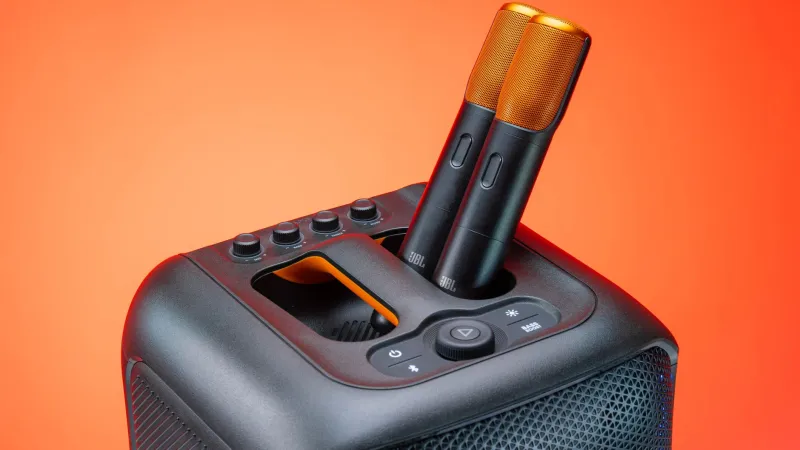
- A quality PA speaker system (JBL, Yamaha): $400–$800
- A dedicated karaoke mixer or processor: $200–$400
- Two quality wireless mics: $150–$300
- Smart TV or projector for lyrics display: $300–$500
- Song subscription or expanded library: $15–$20/month
Year 1 total: ~$1,500–$2,300 Year 5 cumulative: ~$2,400–$3,500
Enthusiast Setup ($3,000–$6,000+)
- High-end PA system: $1,000–$2,500
- Professional karaoke software (like Karaoke Builder or PCDJ): $100–$300 one-time
- Premium wireless mics: $300–$600
- Large display or dedicated projector + screen: $500–$1,500
- Acoustic treatment and lighting: $300–$800
- Large song library purchase or subscription: $200–$400/year
Year 1 total: ~$3,000–$6,000+ Year 5 cumulative: ~$4,000–$7,500
The Crossover Point: When Home Wins
Here's where it gets interesting. If you're spending $80 per night going out twice a month, you'll spend roughly $1,920 per year on the bar experience. A mid-range home setup pays for itself somewhere between years one and two, depending on how often you actually use it.
By year three, the home setup is almost certainly the cheaper option — and by year five, the gap is substantial. The enthusiast-level setup takes longer to break even, but for someone hosting regular karaoke nights for groups of 10–20 people, the math still works out. You're essentially becoming the venue.
There are also costs that don't show up in the numbers but matter: the ability to sing whenever you want, song catalogs that don't depend on what the bar happens to have loaded, and the freedom to customize everything from the key to the echo level.
What You Don't Get at Home (And Why It Might Still Matter)
Let's be fair. The bar experience offers things a home setup genuinely can't replicate.
There's the social energy of a crowd that isn't your same six friends every week. There's the thrill of performing for strangers. There's the bartender who knows to bring you water between songs. And for a lot of people, the going out part of karaoke night is inseparable from the singing itself.
If karaoke is your social connector — the reason you leave the house, meet new people, and feel like part of a community — then no home system replaces that. The bar isn't just selling you mic time. It's selling atmosphere, spontaneity, and the slight risk of embarrassing yourself in front of people you'll never see again.
The Hybrid Approach Most Enthusiasts Land On
Realistically, most serious karaoke fans end up doing both. They invest in a solid home setup for regular practice sessions, low-key hangouts, and hosting parties — and they still go out for the full venue experience a few times a month.
In that scenario, the home setup actually reduces bar spending because you're satisfying a chunk of your karaoke appetite at home. You might go out six times a year instead of 24, dropping your annual bar spend from $1,920 to around $480 — and your home setup pays for itself even faster.
The bottom line: if you're singing more than once or twice a month, a home setup is almost certainly worth the investment. The math isn't even close after year two. The only question is which tier makes sense for your space, your group, and how seriously you want to take your stage.