Mic Check, America: A Road Map to the Country's Most Distinct Karaoke Scenes
Karaoke is everywhere in the United States. But "everywhere" doesn't mean "the same." Walk into a karaoke bar in Memphis and you'll have a fundamentally different experience than you'd get in Seattle or Miami or Chicago. The songs, the crowd energy, the unwritten rules — they shift dramatically depending on where you land. If you're the kind of traveler who'd rather spend a Tuesday night singing with locals than scrolling through hotel cable, this guide is for you.
Consider it a karaoke road trip without the gas receipts.
Nashville, Tennessee: Where the Bar Is Literally High
Nashville is an obvious starting point, but it earns that status. This is a city where the person next to you at the mic might actually be a working musician, a session vocalist, or someone who drove in from Murfreesboro with a demo tape and a dream. The talent level at Nashville karaoke nights runs higher than almost anywhere else in the country — and that shapes everything.
"People here take the song seriously," says Jamie Holloway, who books entertainment at a Lower Broadway honky-tonk. "They're not just singing. They're performing. You better bring something."
The song catalog skews heavily country, obviously, but don't sleep on the classic rock and outlaw country sections. Waylon Jennings, Merle Haggard, and Kris Kristofferson get real respect here. If you're visiting and want to fit in, pick something with genuine roots — a Hank Williams track or a Dolly Parton deep cut will earn you more goodwill than a pop hit.
The vibe is warm but discerning. Show up ready, and Nashville karaoke will be one of the best nights of your life.
New York City: The Underground and the Upstairs
New York's karaoke scene is layered in a way that reflects the city itself. On the surface level, you've got the classic bar-style open mics scattered across every borough. But dig a little deeper and you find something more interesting: private room lounges in Koreatown on 32nd Street that run until 4 a.m., underground pop-up karaoke events in Bushwick lofts, and themed nights in the East Village that make a sport out of obscurity.
"The culture here rewards weirdness," says Dani Okafor, a regular at several Manhattan karaoke spots. "The more unexpected your song choice, the more the crowd respects it. Nobody's impressed by 'Shallow' anymore. But if you pull out a Sade deep cut or a '70s funk track nobody's heard in years, the room goes nuts."
Koreatown is its own universe worth visiting separately. The norebang (private room) format — where you rent a booth for your group by the hour — is the dominant style, and the song libraries tend to be enormous, with strong K-pop, J-pop, and classic American pop selections running alongside each other. It's a completely different energy from open-mic bar karaoke, more intimate and less performative.
For visitors: book a private room in K-Town for the full experience, then hit a bar-style spot in the Lower East Side for a contrast. You'll see two completely different versions of New York karaoke in one night.
Los Angeles: K-Pop, Camp, and the Art of the Bit
LA's karaoke culture is, predictably, theatrical. This is a city full of people who want to be seen, and karaoke gives them a legitimate stage. But it's also more diverse than you'd expect.
The Koreatown neighborhood in LA — larger and arguably more established than NYC's — hosts some of the best norebang spots in the country. Venues like those along Western Avenue run deep catalogs with thousands of K-pop tracks, and the production quality of the rooms themselves (lighting rigs, tambourines, song-specific video backdrops) is genuinely impressive.
Outside of K-Town, LA karaoke leans theatrical in a campy, knowing way. Drag karaoke nights in Silver Lake and WeHo are institution-level events. Camp is celebrated. Commitment to the bit is mandatory. "You can bomb here and still be a hero if you're fully committed," says venue host Remy Torres, who runs a monthly drag karaoke event in Hollywood. "Sincerity and absurdity get equal applause."
Song selections in LA trend toward pop divas, musical theater, and anything with a dramatic arc. Whitney Houston, Celine Dion, and Beyoncé are perennial favorites — but so is a well-executed parody track if you can find one in the catalog.
Chicago: Blue-Collar Roots, Big-City Energy
Chicago karaoke has a particular kind of grounded authenticity to it. The city's working-class neighborhoods — Pilsen, Bridgeport, Wicker Park — host bars where karaoke is genuinely communal, not performative. People aren't there to be seen. They're there to sing.
The song catalogs at Chicago venues tend to be deep in classic rock, Motown, and Chicago blues — which makes sense geographically and culturally. "People here want songs with soul," says bar owner Terrence Gill in Bridgeport. "Not just something that sounds good. Something that means something."
For travelers, the North Side bar scene offers a more polished karaoke experience, while the South and West Side spots deliver something rawer and more real. Both are worth your time.
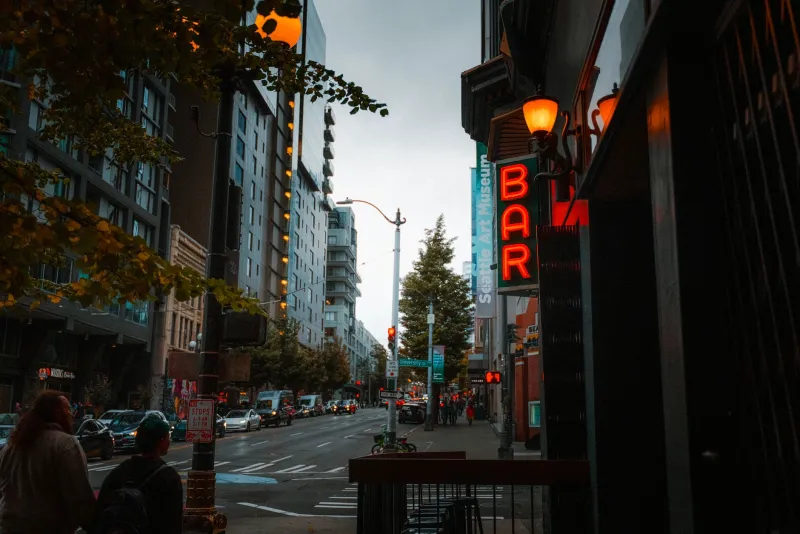
Seattle and the Pacific Northwest: Indie Credibility Optional
Seattle's karaoke scene is quieter than you'd expect from a music city, but it's deeply thoughtful. The Pacific Northwest's indie-music DNA shows up in the song choices — expect a lot of Radiohead attempts, Nirvana tributes, and genuinely surprising picks from artists most people haven't heard of.
"There's a kind of anti-mainstream pride here," says regular attendee Cass Mendez. "People will literally apologize for picking a top-40 song. But then they'll absolutely nail it and nobody cares anymore."
The catalog depth at Seattle's better venues is notable. Song libraries tend to include a wider range of indie, alternative, and folk tracks than you'll find in most American cities. If your usual go-to is something off the beaten path, Seattle is where it might actually be in the system.
How to Fit In Anywhere
Regardless of where you land, a few universal rules apply. Tip your KJ (karaoke jockey) early and often — they control the queue and they remember generosity. Don't hog the mic if the room is packed. And if you're in a private-room format, the etiquette is simple: cheer for everyone, even when the singing is rough. That's the whole point.
The best karaoke nights happen when you stop trying to perform and start trying to connect. That's true whether you're in a honky-tonk in Nashville or a neon-lit booth in Koreatown at 2 a.m.
Same stage. Different song. Every city.